Search This Blog

Showing posts with label Vietnam Airlines. Show all posts

Tuesday, June 30, 2015

Fleet Updates: Vietnam Receives A350; Postpones B787

Vietnam Airlines (VNA) earlier today took delivery of their very first Airbus A350-900 (A359). The aircraft is the first new widebody added to VNA's fleet in over 10 years, and alongside the Boeing 787-9 Dreamliner (B789), will mark the modernization of its long-haul fleet, currently consisting of Airbus A330s and Boeing 777s.

Photo courtesy Airbus/ATWOnline
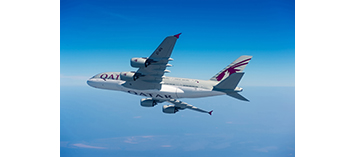
VNA becomes only the second carrier to operate the A359, after Qatar Airways (QR), and has orders for 13 additional A359s.  The inaugural route will be from Hanoi (HAN) to Paris-Charles de Gaulle (CDG) sometime in 3Q of this year.


As for the B789 delivery schedule, sources have confirmed that the handover will be delayed until July 24. There was reportedly a minor issue with the planned interior configuration, and changes had to be implemented before the aircraft received its airworthiness certificate.

This is the same aircraft, operated by Boeing pilots, that wowed spectators earlier this month at the Paris Air Show with a near-vertical takeoff.  Below is a video from Boeing on the preparation and warmup flights.

VNA plans on introducing the B789 on its London-Heathrow (LHR) routes.

Tuesday, May 5, 2015

Another Passenger on Vietnam Airlines is Fined for Smoking Onboard

Another passenger, this time on a Vietnam Airlines (VNA) domestic flight from Hanoi (HAN) to Saigon (SGN), has been fined for smoking in the lavatory.  The incident occurred on May 1.

This passenger obviously doesn't read VNAFlyer.

The Civil Aviation Authority of Vietnam (CAAV) imposed a 4 million VND (~$183 USD) fine on Nguyen Canh Dinh, who claimed that he did not see the No Smoking signs, and only smoked a little bit.

The crew was alerted when the smoke detector in the lavatory was triggered.

The CAAV has the authority to levy fines up to 5 million VND, which is a minute amount compared to the U.S. Federal Aviation Administration (FAA) fine of up to $5,000 USD, or over 100 million VND.

The CAAV also recently pledged to bring civil aviation standards in Vietnam up to a level acceptable to the FAA, which would open up the possibility of direct flights from Vietnam to the U.S.  Currently, Vietnamese carriers are not allowed into U.S. airspace, and U.S.-based carriers are not allowed to start direct service into Vietnam.

Sunday, April 26, 2015

Small Bites Hall of Shame: Vietjet Strands Wheelchair Passenger; Passenger Slaps Staff, Vietnam Crew Smuggle Gold

Vietjet Air (VJ) staffers at Danang International Airport (DAD) in central Vietnam decided to strand a wheelchair-bound passenger, citing safety concerns. The passenger originally flew in from Hanoi (HAN) with no issues, but when she checked in for the return flight, rather than deal with assisting her from the tarmac up the airstairs to the plane, the staffers thought it was more prudent to cancel her ticket and issued a refund.  The passenger had to wait another 6 hours for an available seat on a Vietnam Airlines (VNA) flight. The staffers were subsequently fined VND 5 million by the Civil Aviation Authority of Vietnam (CAAV), or approximately USD 250, with further discipline possible from the company.


On the flipside of VJ news, a female passenger was fined VND 7.5 million (approx. USD 345) by the CAAV for slapping a male VJ staffer after she was asked, and agreed to, to have her carryon luggage weighed. VJ has a 7kg limit on carryons, and the passenger was indeed over the limit.


VNA isn't immune to bad news: Both a pilot and a flight attendant were arrested in Busan, South Korea for smuggling gold in their shoes without declaration.  What's more amazing is that they apparently didn't know the other was doing the same thing, even though they were each being paid USD 250 to smuggle the gold in their shoes.  The gold, at present prices, was valued at over USD 227,000.

Saturday, April 25, 2015

Spring 2015 Asian Escapade

Yes, I know I haven't finished my last trip report... but I wanted to give you a heads up that I just came back from another trip. As you can see below, we hit a lot of places in a short amount of time. I call it "run-and-gun" but it's definitely not for everyone.

I enjoy maximizing the return on value to visit cities I normally would just connect through; I previously wrote about utilizing stopover privileges, and how you can flex them to your advantage.

Read more: Maximize the Layovers on Your Itinerary

As the real-life example here, I was able to stretch out a simple trip to Vietnam to include stops in Tokyo and Kyoto during cherry blossom season, Taipei, Hong Kong, and Chicago.

The map of my flights:
Image source: Great Circle Mapper
What you see above is actually a combination of paid and award bookings (and another example of why it's so worth it to pay attention to miles!). The foundation of the whole trip is a purchased double open-jaw roundtrip, which had us flying Seattle (SEA) to Tokyo-Narita (NRT), then as the return Saigon (SGN) to Los Angeles (LAX). By flying back into LAX instead of SEA, I was able to save a couple hundred dollars in airfare, even after counting the cost of buying a separate one-way flight LAX-SEA.

Sidenote: You'll probably see me refer to "we" a few times. I'm fortunate enough to be able to travel with my wife and some friends of ours, so when you scale the savings up, it starts amounting to a lot!

To get from Japan to Vietnam, we cashed in some miles and flew in comfort while maxing out how much we could fly.

So I have a full report for you: flights, hotels, ground transportation, and experiences.  Our complete itinerary, so that you can visualize it and either envy or pity us:
  • Alaska Airlines, from Seattle to Los Angeles
  • American Airlines, from Los Angeles to Tokyo-Narita
    • LAX Admirals Club
    • Hyatt Regency Tokyo
  • Shinkansen, from Tokyo to Kyoto
    • Ryokan Ryokufuso
    • Hotel Nikko Kansai
  • Japan Airlines, from Osaka-Kansai to Taipei-Taoyuan
    • KIX Sakura Lounge
    • Grand Hyatt Taipei
  • Cathay Pacific Airways, from Taipei-Taoyuan to Hong Kong
    • TPE Business Class Lounge
    • Hyatt Regency Tsim Sha Tsui
  • Cathay Pacific Airways, from Hong Kong to Saigon
    • HKG The Bridge Business Class Lounge
    • Lan Lan 2 Hotel
  • Vietnam Airlines, from Saigon to Danang
    • Hyatt Regency Danang
  • Vietnam Airlines, from Danang to Saigon
    • Lan Lan 2 Hotel
  • Phuong Trang/FUTA Buslines, from Saigon to Can Tho
    • West Hotel
  • Japan Airlines, Saigon to Tokyo-Haneda
    • SGN The Bamboo Lounge
  • American Airlines, from Tokyo-Narita to Chicago-O'Hare
    • NRT Admirals Club
    • Conrad Chicago
  • American Airlines, from Chicago-O'Hare to Los Angeles
  • Alaska Airlines, from Los Angeles to Seattle
So stay tuned!

Tuesday, April 21, 2015

First Boeing 787 for Vietnam Airlines Rolls Off Assembly Line

Short but sweet news: FlightGlobal reports that Vietnam Airlines' (VNA's) first Boeing 787-9 (B789) has completed assembly and has rolled out of the hangar.

Photo courtesy Vietnam Airlines/FlightGlobal
Its next stop will be the paint shop to put on the VNA livery, then test flights will commence.

VNAFlyer previously broke the story about interior cabin configurations.

This first B789 is leased, and will have 28 business class seats from Cirrus and 283 slimline economy seats from B/E Aerospace.

While the leased aircraft will not have a deluxe economy section, VNA's purchased airframes will be configured with 28 business, 35 deluxe economy, and 211 economy seats.

The first B789 will be deployed on the Hanoi (HAN) to London-Heathrow (LHR) route commencing June 29, and split time with the Ho Chi Minh City (SGN)-LHR sector.

Wednesday, March 11, 2015

Update: VNA's First 787 in Final Assembly

Apparently Vietnam Airlines' (VNA's) first Dreamliner has entered the beginning stages of final assembly at the Boeing factory in Everett, WA. 

Final assembly means that most of the smaller components that can be installed have been installed, and all that's left is to join the large body sections such as the flight deck, fuselage, wings, engines, and landing gear. This process can take a month or more to complete.


VNA is due to receive the 787-9 (B789) in late May, with the first scheduled long-haul flight scheduled for Hanoi (HAN) to London-Heathrow (LHR) on June 29. It will be painted in VNA's updated livery that has already appeared on a number of Boeing 777-200s (B772) after repainting, and on the new Airbus A350-900 (A359) that emerged from the paintshop in Toulouse recently.

(H/T: All Things 787)

Tuesday, March 3, 2015

Vietnam Airlines Confirms New Cabin Uniforms; But a Different 787 Business Seat?

Vietnam Airlines (VNA) has confirmed the introduction of new uniforms for cabin and flight crew members:

VNAFlyer previously posted an Instagram photo of the purported uniforms captured on the computer screen of an unknown person.

The traditional Vietnamese ao dai is preserved, though now uniform colors are based on the cabin being served: blue for economy, and gold for business. The new uniforms can already be seen on some international routes.

What's most striking to me actually isn't the flight attendants posing in their uniforms. It's that they were photoshopped onto a background of a 787 cabin, and the seats shown are decidedly different than the ones that were "officially released" by VNA:


Honestly, the doctored photo with the FAs could be more accurate, as they show an interior color palette that more closely resembles their current cabin, as well as the rendering for the A350 cabin:

I will follow up with what I find out...

Tuesday, February 24, 2015

Small Bites: 1,000 Bonus Miles for Hotel; More Qatar codesharing with Bangkok; Flight Delays During Tet


Rocketmiles is offering 1,000 bonus miles or points to your favorite airline program, on top of what you would normally earn. Just use this signup link.


Qatar Airways (QR) announced more codeshare flights with Bangkok Airways (PG) for onward travel beyond Bangkok (BKK) and Phuket (HKT), both of which are served with direct QR flights from Doha (DOH), including an Airbus A380 to BKK.


Over the Tet holiday, airlines in Vietnam reported 928 delayed flights, or 22.1% of all flights. Vietnam Airlines (VNA) took the biggest hit, with 23.8% of its flights delayed. In total, 4,203 flights carried over 655,000 passenger during Tet, a time when the airlines increase flights and capacity to deal with demand.

Tuesday, February 17, 2015

New Cabin Crew Uniforms for Vietnam Airlines?

A reader recently emailed me, alerting me to an Instagram post from user "flywithdinh" that purportedly shows new uniforms for cabin attendants, as part of Vietnam Airlines' (VNA's) rebranding effort.
If accurate, it may indicate that VNA looks to be differentiating the seniority of the crew members by uniform color (yellow for purser), as well as providing a different outfit onboard and away from the plane.

Here is a photo of the current cabin crew uniform:

What do you think? Do you like the updated look or the current uniforms?

(H/T Q.T.)

Small Bites: 1st VNA A350 Going in for Paint Job; Thai Cuts Routes, Fleet; Jetstar Employees Arrested for Stealing Fuel

A rendering of a VNA A350
Vietnam Airlines' (VNA's) first Airbus A350-900 (A359) is fully assembled and will be heading into the paint shop on Wednesday. Delivery is slated for late in the 2nd quarter of 2015.

(H/T Flyertalk user AlexMills93)


A Thai Airways A380
Thai Airways (TG), currently in a financial crisis, has made further cuts to routes from its homebase in Bangkok (BKK) to Paris, London, and Frankfurt. This is part of a rehabilitation plan embarked by TG to prevent falling into bankruptcy. Also included in the plan is decommissioning of 44 aircraft from its fleet of 141, including the accelerated retirement of its Airbus A340-600s (A346s). TG also regrets ordering the Airbus A380.


Photo source // Thanh Nien News
Several Jetstar Pacific (BL) employees have been arrested for stealing thousands of liters of jetfuel over the course of two years from Tan Son Nhat Airport (SGN), and then reselling it after mixing it with diesel. Police recovered 5,800 liters of the stolen fuel.

Friday, February 13, 2015

Passenger Fined US$187 for Smoking on a VNA Flight; Is That Enough?

An Australian-Vietnamese passenger was fined 4 million (US$187) for smoking in a lavatory on board a Vietnam Airlines (VNA) flight inbound from Australia.

The incident happened Wednesday on flight VN772 from Sydney (SYD) to Tan Son Nhat Airport (SGN).

The flight crew was alerted when the smoke detector in the lavatory was triggered. Flight attendants then found the passenger, Ta Ngoc Tuan, in the lavatory with an open pack of cigarettes and smoking.

The maximum fine that can be imposed in Vietnam is ₫5 million (US$237).

Vietnam is trying to earn the Federal Aviation Administration's (FAA's) approval to start direct flights to the U.S., but the aviation safety standards in Vietnam have so far not passed muster.

This low fine is one of the symptoms of the lax civil aviation system in Vietnam. Even the Southern Airports Authority (SAA), which levied the penalty, admitted that the fines were not high enough to deter smoking on board, and this latest incident was the second documented case this year.

I do find it curious that after stating that fact, the SAA still did not levy the maximum penalty.

Read more: Boeing Signs Memo with CAAV, Pledges to Help Start Direct Vietnam-US Flights

But beyond that point, while a possible US$237 fine may be steep to some, it pales in comparison to other countries' penalties. Punishment for the same violation in the United States can be up to US$5,000 (₫106,650,000), along with immediate arrest and possible prison time.

Image source: Wikipedia
Why is this such a big issue for the airlines and aviation authorities? Most would point to the incident involving Varig Flight 820, where the cause of a fire was suspected to be a cigarette butt that was discarded in the lavatory waste bin and ignited the contents. The fire subsequently lead to a crash landing in a field, where the aircraft was consumed by flames.

Of the total 134 persons on board, only 11 survived. Many of the 123 deaths occurred before the crash due to smoke inhalation.

The civil aviation authorities in Vietnam should have the means to deter seemingly minor violations such as smoking in the lavatory, and a maximum find of a couple of hundred dollars just isn't going to cut it.

Combine that with the cultural phenomenon in Vietnam and elsewhere in Asia of people sneaking into public restrooms to skirt no-smoking policies for a quick smoke. This behavior may be a mere nuisance on the ground in a coffee shop, but can have catastrophic effects while in-flight. The fines must be steep enough to alter behavior that many consider to be "normal."

I'm glad this passenger was punished, but am disappointed that the SAA did not levy the maximum fine allowed, and very concerned that the fines overall are so little.

I would bet the FAA shares the same concerns.

Do you think the fine was high enough? Too much? Just right? Leave a comment below!

Thursday, February 12, 2015

Trip Report: Getting Shanghaied from Seattle

Intro: Ticketing and Getting Ready

This is the first chapter of this trip report; however I did start writing this report starting in the middle, when I met up with my VNA flight

Other chapters:
Being based in the US, I do have to fly other airlines to get to Vietnam (or to connect to a Vietnam Airlines [VNA] flight) since VNA can't fly directly to the US. My preferred carrier is American Airlines (AA), and on this trip my lovely wife and I were starting our trip in Seattle (SEA).

Our itinerary:
  • Outbound
    • Day 1: Fly from SEA-Los Angeles (LAX) on Alaska Airlines (AS); spend the night in Los Angeles (14 hours)
    • Day 2: Fly from LAX to Shanghai (PVG) on AA; spend the night in Shanghai (20 hours)
    • Day 3: Fly from PVG to Saigon (SGN) on VNA, reaching our final destination.
  • Return
    • Day 1: Fly from SGN to Tokyo-Narita (NRT) on Japan Airlines (JL); 1.5 hours connection in NRT, then flying NRT-LAX on AA; spend the night in Los Angeles (23 hours)
    • Day 2: Fly LAX-SEA, completing our trip.
Image source: Seattle/Tacoma
International Airport / Facebook
Even though our first flight was with AS, it was still an AA-issued ticket and it was the controlling carrier by virtue of the international segment operated by AA.

We were able to take advantage of some long layovers allowed by our fare rules, so we were able to visit family in LA twice, as well as visit Shanghai.

This trip required me to go out to the airport to book and ticket, not because it was complicated, but because there seemed to be a problem with AA's system communicating with JL's systems and showing the correct availability.

The airport agent was quite surprised that anyone decided to come in personally to book a ticket, but I'm glad I did. It took him several attempts but he finally managed to get the system to book my itinerary (again, it wasn't because of the complexity, it was because JL's system denied that there was the available fare). With printed confirmation in hand, I go home to pack up and leave in a few days' time.


Travel Documents

Thankfully, my U.S. passport still has several years before expiration (entry into Vietnam requires at least 6 months of validity), and I have a visa waiver issued from Vietnam (valid for 5 years), meaning that I'm not required to apply for a visa when I visit. The stress of having the apply for the visa and wait for it to be issue is eliminated, and I can focus on other things.

Image source: US CBP
I've also previously signed up for Global Entry (GE), an expedited reentry program from U.S. Customs and Border Protection (CBP). Part of the "Trusted Traveler" family of programs, GE holders agree to a background check to be declared as low-risk and be given access to lines for both passport and customs inspections upon returning to a U.S. airport, so that the holder does not have to stand in the regular lines.

My first time using GE was at LAX, before the most recent renovations to the Tom Bradley International Terminal. I decided to time myself from the opening of the aircraft door to exiting the building: 18 minutes, the majority of which was waiting for my checked bags to come out. I had essentially skipped every line, and never had to wait behind anyone. I had lunch with a friend last week who took 4 hours to exit LAX, and that's as a US citizen.

Image source: TSA
Also included with Global Entry is TSA Pre-Check, which you may have seen at the airport. Pre-Check allows for expedited security screening (again, on the basis that you're a trusted traveler), and gives access to a special line where you do NOT have to take off your shoes or take out your laptop.

The application fee for Global Entry costs $100, and is non-refundable if you are happened to be denied. After applying online, you'll have to schedule an interview at a Global Entry office (located at most major airports).

A similar program called NEXUS costs just $50 and allows the holder to also enter Canada on an expedited basis. However, the required interview must be scheduled at a border office, and appointments are usually booked months in advance because it requires the presence of a Canadian immigration agent as well.

If you can get to the border, and have plenty of lead time, NEXUS is the best deal, costing half of Global Entry yet including all the benefits.

Next chapter: Checking in at Seattle-Tacoma International Airport (SEA); SEA-LAX on Alaska Airlines

Wednesday, February 11, 2015

American Confirms 1st 787 International Routes to Beijing, Buenos Aires

American Airlines (AA), which took delivery of its first Boeing 787-8 Dreamliner (B788) last month, officially announced today the first revenue flights for the new advanced widebody aircraft.

AA's B788 will be based at Dallas-Fort Worth (DFW), AA's headquarters and main hub. On May 7, it will initial fly domestic familiarization and training flights to Chicago-O'Hare (ORD) twice daily.

On June 2, the B788 will make its inaugural international flight from DFW to Beijing, China (PEK). After its return from PEK, on June 4 it will then fly to Buenos Aires, Argentina (EZE).

These flights will be available for booking starting this Saturday, February 14.

"We look forward to welcoming our international customers onboard the 787 with its modern amenities and comforts beginning this summer," said Andrew Nocella, American's chief marketing officer. "Adding the 787 Dreamliner to our network gives us the opportunity to increase our efficiency on long-haul flights across the globe and potentially open up new markets in our network. It's a big win for customers and just the latest example of how American is going for great."

For travelers from the United States to Vietnam, AA's DFW-PEK flight opens up another option, as AA fare rules generally allow passengers to connect in China onto Vietnam Airlines (VNA) and other carriers. For instance, a passenger can fly DFW-PEK then onward to Saigon (SGN) or Hanoi (HAN) on VNA.

VNA is set to take delivery of its own Dreamliner later this year.

The B788 will have 2 classes of service, with 28 lie-flat seats in business class with all-aisle access, arranged in a unique 1-2-1, foreward/backward-facing configuration. In-flight entertainment is on a 15.3-inch HD touchscreen, and Bose noise canceling headsets will be provided. A walk-up bar for midflight drinks and snacks will also be available.

In economy, there are 198 seats in a 3-3-3 configuration, 48 of which will be in the extra-legroom Main Cabin Extra section, reserved for the airline's elite passengers and also available for a fee. Each economy seat will feature a 9-inch HD touchscreen.

All seats will feature universal AC and USB power outlets, as well as onboard Wi-Fi.

AA has ordered 42 Boeing 787s in total, in both the -8 and the stretched -9 versions, with options for 58 more.

Tuesday, February 10, 2015

Vietnam Airlines Releases Interior Images for 787, A350

On Tuesday, Vietnam Airlines (VNA) posted seatmaps and rendered images for their new Boeing 787-9 (B789) and Airbus A350-900 (A359) aircraft. The images appeared on VNA's official Facebook page.

The images confirm my previous anonymously-sourced information on the B789 that the new business class seats are the Cirrus from Zodiac Aerospace, the deluxe economy seats are from HAECO (nee TIMCO), and the economy seats are the lightweight Pinnacle seats from B/E Aerospace.
Rendering of VNA's B789 business cabin.
Image source: Vietnam Airlines

Rendering of VNA's B789 deluxe economy cabin.
Image source: Vietnam Airlines

Rendering of VNA's B789 economy cabin.
Image source: Vietnam Airlines
What was surprising to me were the images for the A359 interior. Instead of going for fleet commonality in business class by installing Cirrus on the Airbus, VNA opted to use what looks like a version of EADS Solstys, which is a staggered forward-facing product.
Rendering of VNA's A359 business cabin.
Image source: Vietnam Airlines
Also surprising: It seems that VNA is choosing outfit the A359's deluxe economy cabin with the regular Pinnacle economy seats, still at 9-abreast in a 3-3-3 configuration (instead of the 7-abreast, 2-3-2 truly bigger seat configuration on the B789), just with more legroom!
Rendering of VNA's A359 deluxe economy cabin (?).
Image source: Vietnam Airlines

Rendering of VNA's A359 economy cabin.
Image source: Vietnam Airlines
I'm really REALLY hoping that the A359's configuration is not set in stone, especially in regards to the deluxe economy cabin. While VNA apparently installed a proper premium economy product on the B789s, they didn't do anything special on the A359s except give more leg room (akin to what many US-based carriers do). Perhaps this was a mistake in posting the images? Or an incorrect interpretation?

I feel that VNA had the chance to ensure fleet commonality in seating and features, departing from their previous ragtag fleets mixed from owned aircraft and aircraft from different lessors. Instead, they provide two completely different premium cabin products, which can only lead to operational complexities, crew confusion and dissatisfaction for the premium passenger.

I'll admit that I love the Cirrus seat, and I'm sure that the Vantage XL is a fine product as well. I do feel they should have stuck with one or the other. My speculative guess? There may have been a seating supply shortage from one vendor that required using the other's product, as to not delay delivery for either aircraft any longer.

One last small point of contention: I do hope VNA follows the lead of other carriers of installing a proper walk-up bar in business class, instead of what was pictured:
Image source: Vietnam Airlines
Still, it's an exciting time for VNA, with two new widebody types coming online this year to replace their aging long-haul fleet. New planes, new cabins, new seats, and even Wi-Fi on board.

What about that seat map?
Let's compare what I thought the seatmap was going to be vs. what was actually released by VNA.
VNAFlyer's predicted mockup.
VNA's released seatmap.
I think I came pretty close! Especially with the deluxe economy seats and the economy section after the 3rd doors. What I didn't get quite right:
  • While I knew there were 211 seats in economy (and VNA's seat map confirms this), I miscounted and only put 205 seats;
  • I might have given deluxe economy a little too much leg room;
  • I was off on some of the mid-cabin lavatory and galley positions;
  • My business class rows were off, with the middle set more forward rather than being in line with the window seats.
Hopefully VNA will release a seatmap of the A359 soon, so that we can confirm my worst fears the seating arrangement.


(H/T: Flyertalk user nam_sg)

Monday, February 9, 2015

Vietnam Airlines' Inaugural 787-9 Flight to London-Heathrow on June 29

The inaugural international service for Vietnam Airlines' (VNA's) new Boeing 787-9 Dreamliner (B789) is currently scheduled to be on June 29, 2015, flying from Hanoi (HAN) to London's Heathrow Airport (LHR).

This replaces service currently flown on VNA's Boeing 777-200ER (B772).

Flight VN055 will depart HAN at 12:30am for an overnight flight, arriving at LHR at 6:40am.

Read more: Vietnam Airlines' Boeing 787: New Lie-Flat Seats in Business, 2 Different Economy Configurations

The first return flight, VN054, will depart from LHR at 2:45pm on June 29, and arrive back at HAN the next day at 7:50am.

Then on June 30, the B789 will operate a revenue domestic flight for repositioning, Flight VN237 from HAN to Saigon (SGN), departing at 10:00am and landing at 12:05pm.

The first B789 flight out of SGN will depart early on July 1 at 12:05am and arrive at LHR at 6:40am the same day.

Read more: Vietnam Airlines: In-Flight Wi-Fi to be Available on New 787, A350 Aircraft

It seems that while the equipment information has been loaded, VNA is using their B772 seatmaps as placeholders, so if while one can select a seat on a flight scheduled to be on a B789, it's very likely to change.
A screenshot of the seatmap that appears on the LHR routes operated by the B789,
though it's clearly the configuration for the B772. Image source: Reader Andrew R.

A blog reader reports that he was able to select a business class seat on the map, even though he is currently booked in a premium economy seat. I cautioned him to:

(H/T: Andrew R.)

Maximizing China's Transit Without Visa (TWOV)

Have you ever wanted to visit China, but didn't want to pay for a visa?

Typically, China requires those who enter the country to have a visa, even if it's just to connect to another international flight at the airport on the same day.

However, there is a program that allows certain passengers who transit through a Chinese airport without a standard visa, or transit without visa (TWOV), for no fee. There are variances at different airports, but in Shanghai, Beijing, and other major hubs, a transit passenger can have up to 72 hours in China without a visa IF they are connecting to another flight out of the country.

To qualify for TWOV, transiting passengers must:
  • Arrive at the airport from outside China.
  • Depart the airport within 72 hours of the time-stamped arrival;
  • Have a confirmed onward flight to a third country;
    • You must show a printed itinerary, boarding pass, or receipt showing your flight.
    • It does not have to be part of the same reservation; it can be a separate booking.
    • You cannot return to the country from which you came.
    • You cannot fly to another Chinese airport before leaving for a third country.
      • For the purposes of TWOV, Hong Kong and Macau are considered separate from China. 
  • Be a citizen of a country on the approved list for TWOV.
    • The United States is on the list.
Passengers not meeting the requirements above must acquire a visa to enter China. The visa costs US$140 (as of 2/6/2015) for US citizens, but China made a change that makes the visa valid for 10 years and multiple entries. Prior to that, the visa would have been for one single entry.

The visa indeed costs more for US citizens than for others, frankly because it's reciprocal... the US charges Chinese and other citizens US$160 to apply for a tourist visa.

Many itineraries to Vietnam will route through one of the major Chinese airports. In December, I flew from Los Angeles (LAX) to Shanghai (PVG) on American Airlines (AA), which then connected to a Vietnam Airlines (VNA) flight to Saigon (SGN).

Entry and exit stamps from China,
along with the blue TWOV stamp.
I wanted to stay in Shanghai overnight, so requested a TWOV when I reached immigration inspection at PVG. I had prepared a printed itinerary showing my confirmed flight on VNA the next day and handed that over to the immigration officer, who retrieved special stamps to indicate TMOV on my passport.

There is also an immigration form to fill out (typically handed out on your flight before arrival). When you're stamped in, they take the entry half of the form, and give you a stub that you must present when you go through exit immigration.

Thanks to China's fee-free TWOV, my wife and I were able to explore Shanghai for exactly 23 hours overnight.

Thursday, February 5, 2015

VietJet Air wants to grow aggressively, gets money to do it, needs even more money

A VJ A320 in typical company livery. There are several planes
acting as flying billboards, with large advertiser logos.
VietJet Air (IATA code: VJ) is not the first privately-owned airline in Vietnam, but has been the most successful up until now, and has aspirations of continuing its success in a big way.

This is even more notable in that it's primary competitor is state-run Vietnam Airlines (VNA), with a deep war chest of funds to rely on. Most other private competitors have folded shortly after commencing service.

What sets VJ apart is its low cost carrier (LLC) concept, versus VNA's traditional full-service. VJ charges a very low base fare for the plane ticket itself (sometimes as low as US$0), then has fees for almost everything else; ticketing, preselecting seats, purchasing food and drinks on board, even just the mere act of paying in any form incurs a fee.


Leaked photo alledgedly from a bikini
photoshoot onboard a VJ aircraft.
Image source: Tuoi Tre News
Its exuberance has also drawn the ire of the socially conservative Vietnamese government, their most famous incident being an unauthorized in-flight bikini show in 2012 that lead to a nearly US$1,000 in fines. More recently in late 2014, photos were leaked from a purported racy photoshoot that VJ has since disclaimed as unauthorized and not part of an official company promotion.

The company currently has 20 Airbus A320 aircraft operating 150 flights a day to every major city in Vietnam, and several smaller communities, but that's still not enough.

Last year, VJ committed to acquiring up to another 93 A320-family aircraft from Airbus for up to US$9 billion at list prices... even though airlines usually don't pay full price, that's a lot of planes for a young startup company. The order includes 14 current A320s, 43 more-efficient A320neos, and 7 of the larger A321s (the same aircraft VNA uses as its workhorse), with the remaining as options for additional aircraft.

To assist VJ's fleet expansion plans, TPBank of Hanoi has extended a US$400 million line of credit for their initial set of aircraft. This is on top of a US$21 million credit for the down payment of the Airbus order.

VJ is also mulling a bond sale to raise US$200-300 million. as well as an initial public offering (IPO) aimed to raise another US$500-800 million.

Plans for international long-haul expansion have been tempered to focus on strengthening it's domestic network and growing its regional footprint. VJ has decided to take the strategically safer growth plan and temporarily hold off on acquiring widebody aircraft for long-haul services. 

Delaying the start of long-haul service on widebody jets is probably a smart play, especially in light of Japan's Skymark Airlines (BC) declaring bankruptcy, due mainly, according to experts, to its order of the massive Airbus A380 to start Tokyo-New York service, even though BC was primarily a domestic airline using single-aisle aircraft.

2015 should prove an interesting year for VJ, as well as VNA if VJ continues on its trajectory of growth and revenue.

What has been your experience with VJ... would you recommend them? If you haven't flown VJ, would you give them a change, or would you rather stick to traditional-service VNA?

Boeing Signs Memo with CAAV, Pledges to Help Start Direct Vietnam-US Flights

Vietnamese carriers are prohibited from flying directly to the US until the CAAV receives the FAA's "Category 1" designation, which is based on meeting ICAO standards around safety and oversight. VNA has a stated goal of eventually flying from SGN to LAX and will have the aircraft to fly it, but no current authority to do so.

Signing ceremony. Image source: US Department of State
The Boeing Company and the Civil Aviation Authority of Vietnam (CAAV) recently signed a Memorandum of Collaboration, with the goal of guiding Vietnam towards receiving the "Category 1" designation from the US Federal Aviation Administration (FAA), which would allow Vietnamese airlines to begin flying their aircraft into US airports.

The only Vietnamese carrier currently with international long-haul service is Vietnam Airlines (VNA), which has stated its desire to start direct flights from Tan Son Nhat Airport in Saigon (SGN) to Los Angeles (LAX) as soon as 2016.

VNA's main domestic competitor, Vietjet Air (VJ), has stated that it will not start long-haul services for several years.
Read more: VietJet Air wants to grow aggressively, gets money to do it, needs even more money
At a ceremony in Hanoi attended by both Vietnam's Deputy Minister of Transport Nguyen Ngoc Dong and US Ambassador to Vietnam Ted Osius, representatives from the CAAV and Boeing pledged to work closely together to achieve the coveted CAT-1 status.

CAT-1 status is attained by a nation's civil authority when it meets standards set forth by the United Nations' International Civil Aviation Organization (ICAO). Such standards include an evaluation of overall safety, legislation, enforcement, and oversight.

Vietnam is not currently listed on the FAA's evaluation results because of the lack of air service to the US; this gives Vietnam a "Category 2" rating by default, preventing the launch of air service directly to the United States.

Additionally, an ICAO audit in 2007 found that Vietnam's civil aviation system had glaring deficiencies, to the point that the European Union (EU) was considering banning VNA and other Vietnamese carriers from flying in EU airspace.

While this memorandum is non-binding on the parties and the FAA, it does emphasize Boeing's active role in aiding the CAAV undertake and complete corrective measures, and highlights the aircraft manufacturer's view of Vietnam as a major growth market in commercial aviation.

While its current fleet of Boeing 777s and Airbus A330s do not have the range to make the SGN-LAX flight nonstop, VNA is poised to take delivery of two new advanced and efficient aircraft types, the Boeing 787-9 (B789) and Airbus A350-900 (A359), in the next few months to replace the current long-haul fleet.
Read more: Vietnam Airlines' Boeing 787: New Lie-Flat Seats in Business, 2 Different Economy Configurations
SGN-LAX is approximately 8,169 miles.
The shaded area is beyond the
B789's range.
Image source: Great Circle Mapper.
Both the B789s and A359s have the range to reach most of the US and all of Canada.

In recent years, diplomatic relations between Vietnam and the United States have warmed significantly. Vietnam has had a long-standing desire to connect the country to the largest populations of Vietnamese abroad. Efforts to convince overseas Vietnamese to come to their homeland have included the relaxing of travel visa requirements, the implementation of visa waivers, and the facilitation of travel for those wishing to conduct business and commerce in Vietnam.

Over 270,000 people in the greater Los Angeles area identify themselves as Vietnamese or of Vietnamese heritage, with half that population in Orange County alone.

Overall, there are more than 1.5 million Vietnamese living in the US. Other top Vietnamese populations centers are in Northern California Bay Area (over 181,000), Texas (Dallas and Houston metro areas, over 174,000), Washington, DC (over 57,000), and Seattle (over 55,000).

Failing to meet ICAO standards has had a long-reaching effect on Vietnamese aviation, beyond not securing the FAA's CAT-1 designation.

Transport Canada also prohibits Vietnamese carriers from flying into Canadian airports. There are over 220,000 living in Canada who claim a Vietnamese lineage.

Vietnam has invested heavily in aviation infrastructure, including the opening of a new US$645 million international terminal at Hanoi's Noi Bai Airport (HAN), new terminals at smaller airports like Vinh, and a completely new airport on Phu Quoc (PQC) Island to allow larger aircraft to land.

But recent lapses, such as a power outage at an air traffic control center that left airspace around SGN unmonitored for over an hour, give the ICAO and FAA cause for concern.


Tuesday, February 3, 2015

Trip Report: Arrival at Tan Son Nhat Airport (SGN)

Other chapters:
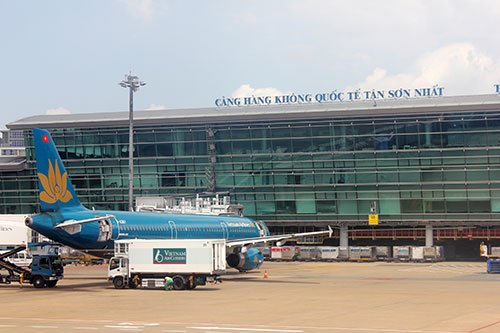
Upon our arrival, our Airbus A321 parks at a remote stand, thus requiring airport buses to get us to the terminal. Along with past experiences, it seems that when Vietnam Airlines (VNA) uses A321s for regional services, those flights are highly likely to be assigned to these remote gates, probably saving the jetbridges for widebodies.

Read more: Vietnam Airlines' Boeing 787: New Lie-Flat Seats in Business, 2 Different Economy Configurations

Image source: Vietnam Investment Review
One (very tiny) upside to the remote stand is that they deplane and board through both the front and back at the same time, so those stuck in the rear of the plane aren't waiting forever to get off.

Those in business class are provided their own shuttle bus, which departs quickly. The economy passengers are directed to 3 other larger buses, each one taking off once full.
Pro Tip: Stand near the left-side doors to be the first to get off at the terminal.
After a 5-7 minute ride to the terminal, we are deposited at the entry doors which lead to a narrow escalator that took us up to the arrivals level. We follow the signs to the arrivals hall, just a short walk away.

The arrivals hall at SGN is divided up into three sections:
  • The main immigration inspection section, where passports are checked before entry.
  • A visa window, for those who pre-arranged to receive a "visa on arrival."
  • A transfer desk, for those who are making onward international connections.
Today was a little busy, with at least 3/4 of the immigration booths manned, and each having lines of 15-20 passengers each. The visa window had about 20 people waiting in line, with another 30 waiting for their applications to be processed.

Our line has a passenger that they examined more closely than normal, so it takes us about 30 minutes to finally get through (should have been about 15 minutes). We head down to claim our baggage, which is already sitting off the belt, as our flight's bags have completed offloading. We load our bags onto free carts provided by the airport, and my wife goes for a restroom break.

While I'm waiting, I scan the customs inspection lines that we have to go through before exiting. A customs "officer" tries to wave me over, but I give the "not ready" hand signal and continue waiting.
Pro tip: Never go towards a customs line that you've been directed to, since frankly you don't have to follow their direction. The sad reality is that forced bribery is alive and well at SGN and other airports, and the agent is essentially fishing, trying to get me to come over so I can be "carefully inspected" and assessed some sort of trumped up violation, in hopes that I will "pay the fine" on the spot.
What one should do is to choose a line that looks like someone is already "being spoken to" since they already busy with that person and will let you pass.
When my wife returns, I guide our carts to a line far away from that agent. We successfully have our baggage x-rayed with no challenge, and we were quickly on our way out to the curb.

As we pass by, I overhear a poor American fellow in his mid-50s who was trying to reason with the customs agent, who in turn threatened to detain his baggage for 3-4 days. Shameful... I wanted to help him too, but I also didn't want to stick around and be inspected myself (though I probably would have if I was by myself).

We make our way through the throngs of people waiting for their loved ones, make a left turn and head towards the taxi "stand" near the end of the terminal building, past the Popeye's Fried Chicken stand (great place for a quick and cheap snack or drink).

The stand is really more of a collection area where taxis pick up customers, and no real defined queue, even with the permanent corral set up.
Pro tip: Walk past the taxi corral and the crowds, farther along the curb. Flag down the taxi of your choice when it approaches. The driver doesn't really care who they pick up. This is how the system at SGN works. 
If you're uncomfortable with this, you'll probably be waiting a while, but you can get a dispatcher to help you. Each taxi company has its own dispatcher in uniform in the taxi area.
I prefer Vinasun... it has the most number of taxis in the company, are the most reliable, and always use the meter. MaiLinh is a decent Plan B. I pretty much avoid all other taxi companies.
Taxi pickup area at SGN.
We quickly get into a Vinasun taxi van and we're on our way into the city.

Stay tuned for the rest of my trip report, before our Shanghai-Saigon flight and on our way home. Thanks for reading!
- VNAFlyer


Trip Report: Flying PVG-SGN on Vietnam Airlines on an A321

Other chapters:
Author's note: Yes, it's weird that I have a VNA segment in this itinerary. It was an AA fare where the rules allowed for a connection onto VNA from AA's PVG flights.

Another VNA A321, heading to Hanoi (HAN)
Thankfully, the scrum that seems to always occur at Chinese airports didn't occur here... it might have even been quite orderly! They call boarding for business class first, and then economy in general, with everyone observing the queue. Armed with hand-notated BPs saying that we were in Row 14 exit row seats (and out of Row 33), I'm feeling mighty content as we board Flight VN523...

... until we actually get to our seats. For some reason, Vietnam Airlines (VNA) designates the row in front of  the doors on an A321 as exit row seats as well. No extra leg room, no recline, and not even a window! Much to our chagrin, all the seats in Row 15 (the actual exit row, as we all know what "exit row" actually means) are actually assigned. How they got assigned, I have no idea, because they were clearly non-status passengers (based on a quick, coincidental scan of their BPs, as well as their fairly naive questions about such things as tray tables and such). The fact is, what the manager and agent said at check-in was completely wrong. Those seats were definitely preassigned, even on a flight that was not full.

A Juneyao A320 parked next to us.
In any case, what also seems to happen is that Rows 10-14 (no Row 13) also are the last to be assigned. When boarding was complete, no one was sitting in Rows 10-14 except for us. I quickly flag down the nearest flight attendant (FA) to ask if we could move, and she happily said that we could choose any seat we wish. Interestingly, this same FA was earlier policing this section, asking passengers who sat down in this section for their BPs and moving them along to their original seats.


Thankfully, we moved out of Row 14 to Row 12. A few other passengers apparently take our move as their cue to move as well, but it isn't a total exodus, more of a spreading out, with a maximum 2 passengers for every 3-seat section.

Interlude: The lesson with VNA is to be persistent, and don't accept their answer, even from a manager or supervisor. It's like a game of chicken or a staring contest... who will give up first? I've had other experiences with VNA that leads me to the same conclusion. Just don't give up, because the culture of the ground staff is to refuse first, hoping passengers will accept what's given to them.

The door closes and we push back 10 minutes past our time of departure. Safety announcements are conducted in Vietnamese, Mandarin, and English. It takes about 15-20 minutes for us to taxi to a runway on the other side of the terminal, giving us a nickel tour of PVG.

A China Southern 737-800 heading towards PVG's control tower.

An American 777-200 followed by a China Eastern 737-800.
Love it or hate it, that new tail makes the AA bird easy to spot.
No further delay as we smoothly take off towards the northwest, make a left turn, and loop around Shanghai then south to Vietnam. The smog is unbelievable... not as bad as Beijing, but still sickeningly thick, much worse than LA has ever gotten.


When you need a paint
that can withstand
Armageddon....
As soon as we hit 10,000 feet and hear the ding, the FAs all jump into action, and the curtain to the first class cabin is ceremoniously closed. The FAs walk down the aisle was a basket of packaged refreshing wipes for the economy passengers, quickly followed by drink service. 

There is a small lull before meal service, so I check out the VNA inflight magazine, Heritage, which has articles in both Vietnamese and English.

The crew comes through with an offering of chicken or fish. As a personal rule, I always avoid airplane fish in coach, so chicken it is!

The chicken is similar to a teriyaki chicken, with linguini, and steamed green beans... definitely better than expected. 

I wasn't going to buy
Kohler, but the attractive
model with a rose
changed my mind.
The side salad, on the other hand, is quite frankly gross. The shrimp look like they were frozen for too long, then dipped in hot water before being tossed onto the salad, and the veggies look wilted. I don't even bother opening the salad.

Dessert was cut fruit ("fresh" was questionable), and the crew also came through with hot tea and coffee. Overall, it's a serviceable lunch on a 4-hour flight, but I'm glad we had brought snacks.

The rest of the flight is pretty uneventful.  Entertainment is in the form of Vietnamese variety shows on small overhead screens, with headset provided in the seatback pocket. Blankets and pillows were also provided, nice touch for coach.

The FAs did their jobs quite well, and was generally personable overall. Interestingly, the FA who primarily served our section was a native of Japan who spoke only Japanese and English... no Vietnamese.

Only a couple of people try to go up front to use the lav, and they were turned away. There are 3 lavs in the far rear of the plane, so the parade of passengers was constant. The cabin temperature was a touch on the warm side, but tolerable. 
Descending into Saigon.

We land at SGN right on time, and taxi to a remote stand for arrival.

Next chapter: Arrival at Tan Son Nhat Airport (SGN)